

How To Hotwire A Blower Motor
Blower motor wiring diagrams
Blower motor wiring diagrams — two most common diagrams
A blower motor problem is easy to fix if you understand how your particular system is wired. Here are the blower motor fix steps:
To make up one's mind which blower motor wiring diagram, first determine if you have a manual or automatic heating system in your vehicle
Do you set the temperature and the system keeps that temperature or do you have to adjust the temperature up manually and then turn it downwardly one time the cabin heats upward? If you ready the temperature and the organisation takes care of the rest, you have automatic climate command. In that case, you usually have a variable speed fan.
If y'all have a manual arrangement where you vary the temperature, you probably accept a three or 4 speed fan. Why practice y'all need to know that? Because nigh automatic systems utilize an electronic motor controller while transmission systems unremarkably use a blower motor resistors to obtain iii or 4 different speeds.
What is a blower motor resistor?
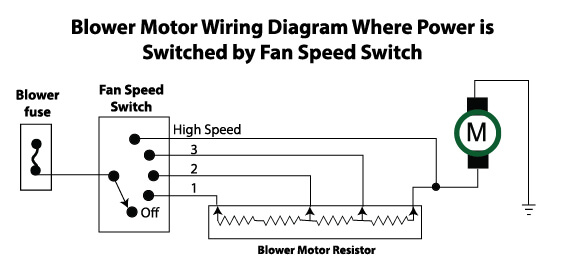
Heating systems with but 3 or 4 speeds use a blower motor resistor along with the speed switch to regulate the motor speed. The resistors are arranged in series to reduce the voltage in steps, depending on where in the serial you use power.
Blower resistors can burn out. When that happens, you lose that speed. So you may have high speed, just no lower speeds.
What is a blower motor controller?
A variable speed motor is controlled past a digital speed controller. In nearly cases, the controller receives a digital input from the speed switch or HVAC control head. The control caput and so sends a command to the motor controller to modify the speed to the driver's preferences. To obtain the requested speed, the motor controller rapidly pulses the ground circuit on and off. So a half speed commuter request will result in the blower motor controller pulsing the ground connection off twice as often as when the fan is running at full speed.
Blower motor wiring diagrams for three or four speed systems
Carmakers utilise these three common wiring methods to supply power and ground to the blower motor in a manual system using a blower motor resistor. In 1 design, the machine maker supplies battery power to the speed switch, which switches the power to the appropriate connectedness on the blower motor resistor. In those applications, the motor resistor reduces ability for the slower speeds and the blower motor has a permanent ground connection to complete the excursion. See the wiring diagram for that setup beneath.
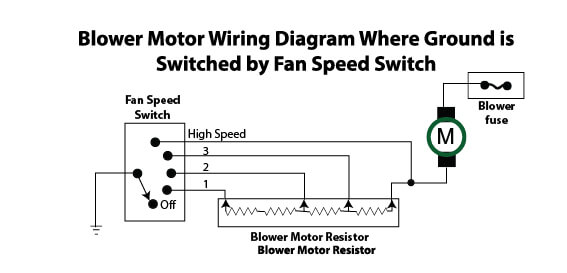
Or, carmakers can supply power to the motor and control blower speeds on the ground side of the circuit. See the wiring diagram for that setup below.
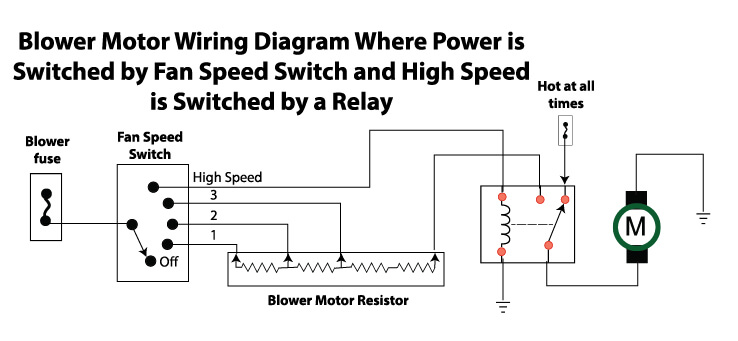
Or, carmakers tin opt for a motor resistor AND a high speed relay. Encounter the wiring diagram beneath for that setup.
Blower motor wiring diagram for variable speed systems
Variable speed blower motors don't utilize a blower motor resistor. Instead they use a blower motor speed command or a ability transistor. Variable speed motors are 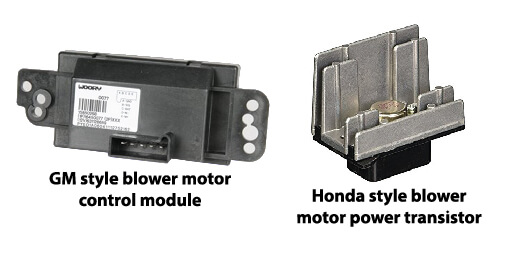 most oftentimes used in vehicles with automatic climate control. In those applications, the HVAC command head is a digitally controlled unit and uses diverse sensor inputs to determine when to supply oestrus. Based on the driver's input to the blower speed switch, the HVAC control head sends a digital signal to the blower motor speed control module. The module uses that information to pulse either ability or ground to the motor. See the wiring diagram below for a typical variable speed motor setup.
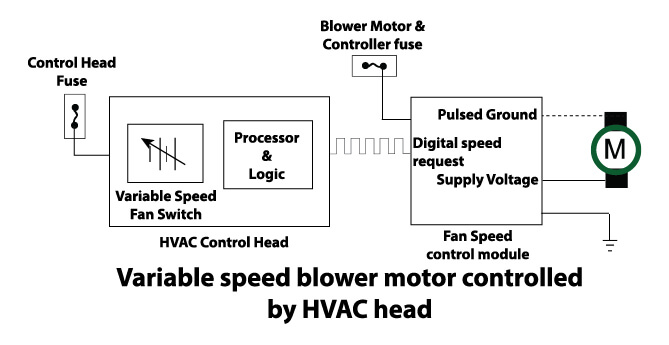
If your motor doesn't piece of work on any speed
In a situation where the motor doesn't work on any speed, the most probable causes are: a diddled power supply fuse, a bad motor ground connection, bad motor speed control module or a failed motor. On all systems, a failed blower motor is least probable. Blower motors generally don't fail out of the clear blue. In near cases, they start to fail past making a high pitched squeal or screeching noise that indicates the bearing is declining. The squealing noise happens most ofttimes in the winter during cold startups and may disappear as the motor heats up. If you ignore the noise, the begetting volition go on to wear to the betoken where the motor won't start at all.
The reason I'one thousand not including the motor resistor as a suspect is because it ordinarily only controls the lower speeds. The highest blower speed usually bypasses the motor resistor completely, so it's not a suspect if the motor doesn't work at any speed.
Start by checking the blower fuse and HVAC controller fuse. If it'southward adept, refer to a wiring diagram for your vehicle and bear these tests:
If you take a variable speed blower motor system:
Disconnect the electric connector at the blower motor and jumper power and basis to the motor, bypassing all the speeds controls. Run a fused jumper from the bombardment to the power side of the motor and connect a temporary grounding jumper to the other motor terminal. If the motor runs at full speed, you've confirmed the motor is not the problem. At that point the suspects are the blower motor speed control module (most likely) or the HVAC control head (less probable, but not unheard of). Unfortunately, you'll need a digital scope or scan tool to test those components, so your only option may be to supplant the parts one at a time.
If power is supplied to blower motor through the speed switch and blower motor resistor:
Disconnect the electrical connector at the blower motor. Apply a multimeter to check for the presence of voltage in the connector with the key in the RUN position and blower speed fix to HIGH. You lot should see battery voltage (12+). If you see bombardment voltage in the connector, connect 1 meter lead to the power terminal in the connector and the other atomic number 82 to the ground connector. If you lot go a skillful basis reading, the problem is nigh probable a bad motor. If you don't see good basis, locate the ground connectedness and clean it. The plug the connector back into the motor and check functioning. If it runs, y'all've solved the problem. If still doesn't run, supervene upon the motor.
If ability is supplied straight to the blower motor and grounded through the speed switch
Disconnect the electric connector at the blower motor. Use a multimeter to check for the presence of battery voltage in the connector with the key in the RUN position and blower speed set to HIGH. If y'all don't see battery voltage, you lot've got a wiring or relay problem on the power supply side of the excursion.
If you do see battery voltage, the trouble is either a bad motor or a problem on the basis side of the circuit. Run a fused jumper from the battery to the power side of the motor and connect a temporary grounding jumper to the other motor terminal. The motor should run on high speed. If it doesn't, the motor is bad. If the motor runs, locate the basis connection and make clean it. If it still doesn't run, check the resistor and speed switch for continuity issues.
Blower simply works on loftier speed
This is a dead ringer symptom of a bad blower motor resistor, 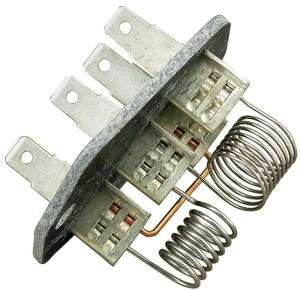 not a bad speed switch. Supersede the resistor.
Blower works on tiresome speeds, just not on loftier speed
Check for bad fuse or bad high speed relay. Swap the high speed relay with some other relay with the aforementioned part number. 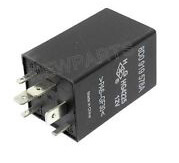 Also, cheque the fuse for the control side of the high speed relay. Make sure the ground side of the high speed relay is working.
Blower works on some speeds but not others
This tin exist a bad blower motor resistor or a failed speed switch. Refer to the wiring diagram for your vehicle and check for continuity on all iii resistors and speed switch setttings.
Blower motor resistor has echo failures
Check for full airflow at the vents. If airflow seems restricted or lower than normal, 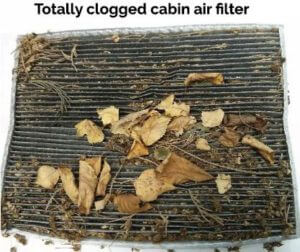 check the cabin air filter. If it's good, cheque for debris on the evaporator or heater. Decreased airflow causes the blower motor resistor to overheat and neglect. Reduced airflow also causes the blower motor to work harder, draw more than current and that tin crusade repeat blower motor resistor failures.
Blower motor fuse blows repeatedly
Blower motor is drawing too much ability. Check the motel air filter for clogging. Check for airflow restrictions in the duct, paying attention to droppings on the evaporator or heater core.
Melted connector at blower motor
See blower motor fuse blows repeatedly.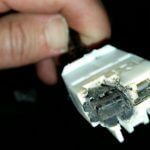
Blower motor squeals or screeches at startup
This is a symptom of a declining blower motor bearing. The bearing is not replaceable. Replace the blower motor.
Blower motor doesn't work in cold weather
Bad bearing in blower motor. Replace blower motor.
Blower motor doesn't close off
If yous accept a variable speed blower motor, supervene upon the 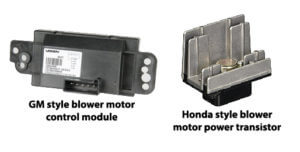 blower motor speed command module. If yous have a 3 or 4 speed blower motor, remove the blower motor relay. If the motor stops, supercede the relay.
©, 2017 Rick Muscoplat
Posted on by Rick MuscoplatSource: https://ricksfreeautorepairadvice.com/blower-motor-wiring-diagrams/
0 Response to "How To Hotwire A Blower Motor"
Post a Comment